From Extraction to Regeneration in the Age of AI
Wealth Matters 3.0 Guide to Building a Life That Thrives Beyond the Consumer and Post-Labor Economy
The Anchor Question in Today’s Thought Piece
In a future where artificial intelligence becomes the overlord of human labor, how can we position ourselves to live a life of abundance? How will our roles change when it comes to labor, ownership, contribution, personal growth, and income?
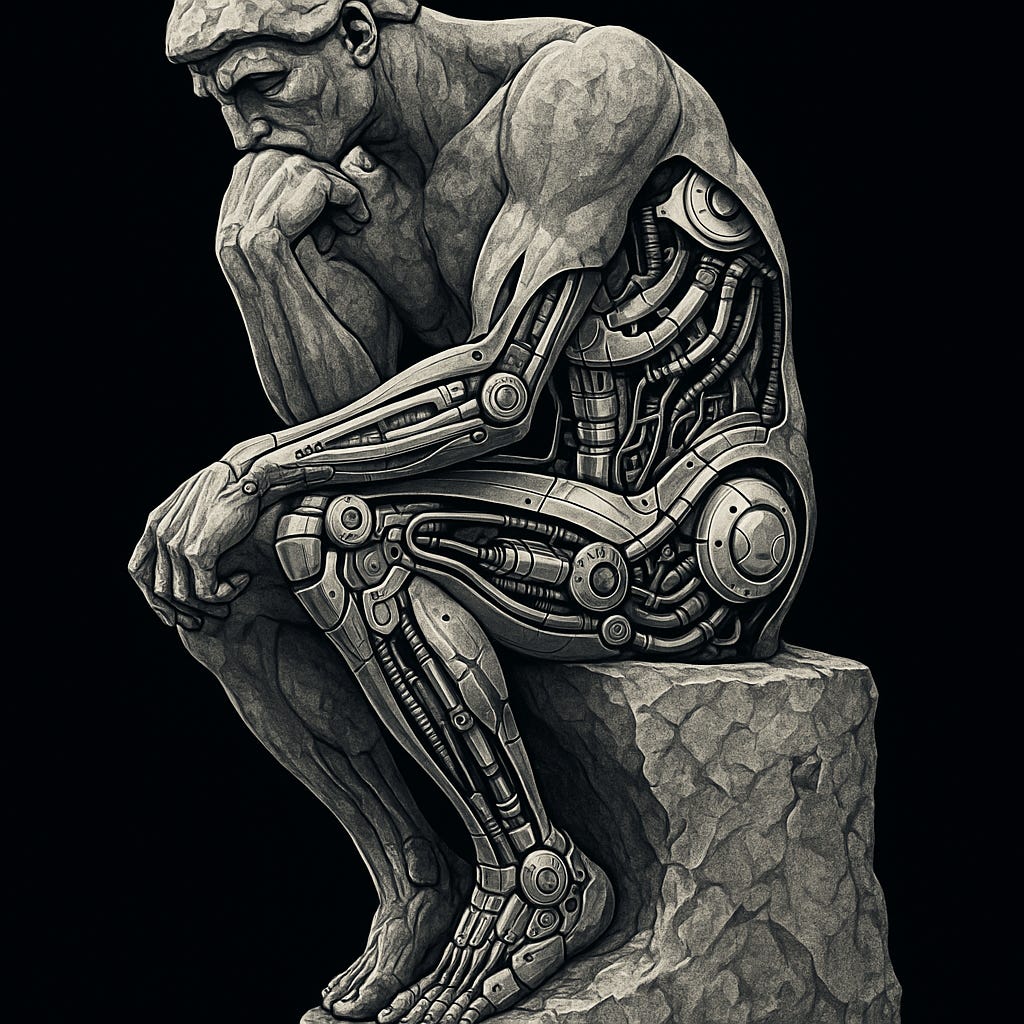
Personal Note From One Node in Humanity’s Matrix
I write this not as an authority above anyone else, but as one node in the matrix of humanity’s collective consciousness. I am simply a person who has been privileged to observe trends, connect dots, and think deeply about where we are headed.
Our species is on the cusp of a massive transition. We are living in a system that is extractive, non-regenerative, and built for an industrial-age consumer economy that no longer serves our long-term survival or flourishing. Yet most leaders and citizens alike do not fully recognize this. The inertia is strong. The divisions between us are deep. The incentives that prop up the old model still dominate our institutions. And it all will change in an instant, whether we are collectively mentally prepared or not.
The arrival of generative AI, powerful enough to automate much of what we now call “work,” is not just a technological revolution. It is a bridge to the next economic system where the definition of work is fundamentally changed forever.
Wealth inequality historically happens because we have tremendous improvements through innovation in the “means of production” that change the dynamic of “property relations,” or who owns what. Property relations change more slowly as the previous beneficiaries of the leaps in means of production hold on to the power and wealth they control for as long as they can.
What lies on the other side of this quantum leap in the means of production will be shaped not only by engineers or policymakers, but by each of us making decisions today.
The question that matters most to me today is this: How can I personally help provide insights that make crossing that bridge safer, fairer, and more abundant for as many people as possible?
This article is my attempt to answer that question in practical terms, using plain language, so we can all play our little part in moving society through this radical change with our humanity intact.
Making a Living When AI Does the Work
The big shift is simple to understand. Instead of people doing the tasks, AI will handle them. That means the true value will come from setting the rules, guiding the AI, and owning the systems it operates within.
Imagine a giant factory run by machines. You are not on the assembly line. Instead, you decide what the machines build, how they build it, and under what terms. You own the building and the profits, not just the sweat and time it takes to operate the tools.
In this new economy, income will come from leadership, stewardship, and ownership rather than repetitive labor.
The Four Areas Where Humans Remain Essential
Even in an AI-dominant future, there are places where only humans can deliver lasting value:
Writing the Rules (Governance and Constraints)
Define the objectives, limits, and success criteria for AI. This is not just programming. It is the moral and strategic framework within which the AI operates.Making Meaning and Building Trust
AI can produce outputs, but humans decide what they mean and which ones matter. Interpretation, narrative, and purpose cannot be automated without losing the human heartbeat.Managing Relationships and Conflict
A world of many AIs still requires diplomats, mediators, and bridge-builders between communities, businesses, and systems.Caring for Physical Systems
Food, energy, housing, and health exist in the physical world. Even with automation, humans must steward the resources, own the infrastructure, and ensure it serves life rather than extracting from it.
From Worker to Principal-Orchestrator
The labor relationship changes completely. Instead of trading hours for pay, you manage portfolios of AI tools, contracts, and assets. Your (and your children’s) higher education focus from today forward MUST be focused on these paradigm shifts.
You become a supervisor of outcomes, not a doer of tasks.
You shift from being a builder to being an allocator of capital, compute, and human attention.
You stop selling your labor and instead earn royalties, rights, and returns from the assets you own.
Owning the Four Primitives
In an AI-powered economy, these are the building blocks worth controlling:
Energy and Compute: Own stakes in datacenters, energy production, and compute markets. Without these, AI cannot run.
Data and Context: Control unique, high-quality datasets and license them for use.
Distribution Channels: Own audiences and platforms through which information flows.
Real-World Assets: Property, clinics, farms, warehouses. Physical scarcity will still exist.
Wrap each of these in rights, such as contracts or licenses, and meter usage to track and generate ongoing income.
Building Income in an AI Economy
Here are income streams that align with a regenerative, future-proof approach:
Residual Royalties: Paid whenever your IP or data is used to train or run AI.
Agentic Ventures: AI agents that operate as businesses under your ownership.
Protocol Fees and Staking: Positions in decentralized infrastructure that earn revenue.
Real Asset Yield with AI Uplift: Physical holdings that become more profitable through AI optimization.
Outcome-Based Contracts: You earn from measurable improvements AI delivers.
The Personal Wealth Stack
Your financial architecture in this new era should have multiple layers:
Entity Layer: Trusts, LLCs, or cooperatives that hold your rights, data, and assets.
Asset Layer: Balanced between real assets, monetary reserves, and AI-related infrastructure.
Distribution Layer: Communication platforms you control and can monetize.
Agent Layer: AI agents under your oversight that either earn or save money.
Risk Layer: Governance, compliance, and insurance to protect the system you build.
Navigating Different Futures: The 2×2 Framework
The AI future could be centralized or decentralized, and resources could be abundant or constrained. Your strategy shifts depending on where we land. There may be an ideal landscape we can strive towards, but more importantly, we each need to have a game plan that can survive and thrive in any of these 4 outcomes.
The Human Skills That Will Matter Most
When the machines run the execution layer, humans will thrive by mastering. Educating yourself and your children for the future should be centered around these skills first and foremost.
Judgment under uncertainty
Incentive and system design
Storytelling and meaning-making
Deal-making and community leadership
Taste and curation
Risk and safety oversight
Actions for the Next 90 Days
If you want to start preparing now, here are the steps that have an impact:
Add AI-use clauses to all contracts for your work and data.
Set up the legal entities that will hold your rights and assets.
Acquire one asset that AI can make more valuable.
Deploy one AI agent to earn and one to save.
Hold reserves in monetary or compute form for flexibility.
Build or secure a distribution channel you own.
The Bigger Picture
We cannot cross this bridge passively. The extractive, non-regenerative economy is failing us, but it is still entrenched in the minds and incentives of many leaders and citizens. If we do nothing, the AI transition could deepen inequality and further concentrate power.
If we take deliberate steps, however, we can use AI to help rebuild the economy as something regenerative and equitable, one that respects human dignity, sustains our planet, and distributes the benefits of abundance more widely.
I offer these ideas humbly, as one voice among many. The future is not written. But together, by shifting from consumers in a system that takes without replenishing, to stewards and co-creators of systems that give back, we can cross this bridge with less harm and more hope.
Yours in abundance!
~Chris J Snook
Upgrade today 20% off forever + 2 Bonuses!
If this article got you thinking, you will love what I share with my paid Wealth Matters 3.0 subscribers. Upgrade today and you will get early access to every chapter of my new book The Rockefeller Method Rewired delivered weekly until its October 28th launch, plus an instant copy of my #1 International Bestseller The Generative Organization, co-authored with Bryan Cassady and 34 other AI experts in your premium channels and archives.
Related
Sources
Brynjolfsson, E., & McAfee, A. (2014). The Second Machine Age – Analysis of how automation and AI reshape work and ownership. Link
Lanier, J. (2013). Who Owns the Future? – Framework for data ownership and royalties in a digital economy. Link
Ostrom, E. (1990). Governing the Commons – Principles for managing shared resources sustainably. Link
Schwab, K., & Malleret, T. (2020). COVID-19: The Great Reset – Broader look at systemic transitions. Link
Tapscott, D., & Tapscott, A. (2016). Blockchain Revolution – Insights on decentralized infrastructure and tokenized ownership. Link
World Economic Forum. (2023). Future of Jobs Report – Current data on automation’s impact on global employment. Link


Great article!