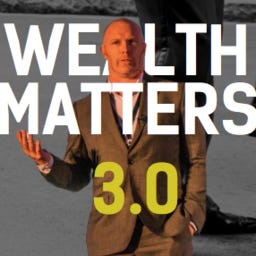
CONNECT WITH HIM: Borgman Capital

A Man Named After 100 Giants
Before Sequoya Borgman became the founding CEO of Borgman Capital, before he had deployed hundreds of millions of dollars into privately held businesses, before he sat across the table from founders, sellers, bankers, attorneys, operators, and limited partners trying to turn family-built companies into institutional-grade assets, he was a kid with a name that sounded like it belonged to the California wilderness on the trail of 100 Giants I walk with my family every Summer in the Sequoia National Forest.
Sequoya.
The name came from Northern California, from Mendocino County in the 1970s, from hippie parents and flower-child energy, and a world that probably did not imagine their son would one day become a private equity investor. As Sequoya jokes in the conversation, he may have become the black sheep of the family by going into accounting, finance, and eventually private equity. But like the trees his name evokes, the story has always had a certain logic to it. Roots first. Then growth. Then scale.
He was born in Northern California, spent part of his childhood in the Bay Area, later moved to North Carolina for high school and college, and eventually found his way to Milwaukee, where he has now lived for nearly two decades. That path from California to the East Coast to the Midwest matters because it mirrors the kind of investor he would become. He is not chasing only the obvious markets, the loudest cities, or the flashiest deals. His firm is built around the places where relationships still matter, where entrepreneurs still care who buys the company, and where valuable businesses can be hiding in plain sight.
This conversation is not just about private equity.
It is about the American business owner’s exit, the investor’s search for durable cash flow, and the quiet art of turning overlooked companies into enduring platforms.
From Hippie Roots to Arthur Andersen
Sequoya’s professional life began not in a fund, but in accounting. He studied accounting, earned a master’s degree, and started his career at Arthur Andersen, which at the time was one of the most powerful accounting firms in the world. Before the collapse of the firm after Enron, Andersen represented a certain kind of rigorous training ground. For a young accountant, it was a place to learn discipline, process, diligence, and the language of transactions from the inside.
Sequoya stayed in public accounting for roughly eighteen years. He worked at Arthur Andersen, KPMG, Deloitte, and eventually RSM in the Midwest. During that time, he focused heavily on M&A transactions and private equity clients. He saw hundreds and hundreds of deals. He watched buyers analyze sellers, sellers defend numbers, advisors package stories, lenders assess cash flow, and investors decide what a business was really worth.
That kind of education is hard to replicate. It is one thing to read about acquisitions. It is another to spend years in the machinery of them, watching what breaks, what holds, what gets overpaid for, what gets missed, and what turns into value after the closing dinner is over.
By the time Sequoya became a partner, he had achieved what many people spend a career chasing: a prestigious role, a secure income, a clear professional identity, and a seat near the center of deal activity. But success sometimes creates its own restlessness. He was advising private equity clients, watching them build, buy, structure, improve, and exit companies. And eventually, the question became unavoidable.
What would it look like to sit on the other side of the table?
The Leap Across the Table
In 2017, Sequoya left the security of a long public accounting career and launched Borgman Capital. It was a leap from advisor to principal, from diligence to ownership, from analyzing the deal to being responsible for the deal. Looking back, he says he wishes he had done it earlier.
The opening he saw was specific. In Milwaukee and the surrounding Midwest, there were not many private equity firms focused on the lower end of the market. Larger firms from Chicago, New York, the West Coast, or other major financial centers could come in and buy companies, but many entrepreneurs and family business owners preferred something different. They wanted to sell to someone they knew, someone local enough to understand them, someone who shared their values, and someone who would not treat the business as just another line item in a blind auction model.
That was Borgman Capital’s wedge.
Not bigger. Closer.
Not louder. More trusted.
The firm has since expanded beyond Milwaukee, with offices and relationships across secondary cities around the country. But the principle remains the same. Borgman looks for good businesses where relationships still matter, where entrepreneurs still care about the buyer’s character, and where a lower-middle-market company can be professionalized, supported, and grown without erasing what made it valuable in the first place.
The Lower Middle Market as an Overlooked Wealth Engine
One of the most useful parts of this episode is Sequoya’s explanation of where Borgman Capital actually plays. The firm focuses on lower-middle-market companies, generally under $250 million in enterprise value, but most of their deals are much smaller, often under $50 million in enterprise value. From a cash flow standpoint, Sequoya describes a range that often begins around $2 million to $3 million of EBITDA and can run up toward $20 million.
That is a critical part of the market. These are not tiny lifestyle businesses, but they are also not the polished auction assets pursued by mega-funds. They are often family-owned, founder-led, cash-flowing companies that have been built through grit, customer relationships, operational knowledge, and decades of local or regional reputation.
For many owners, the business is not merely an asset.
It is their life’s work.
It is also often the majority of their net worth. That concentration creates both opportunity and danger. The owner may have built a valuable company, but may not have liquidity, succession, professional management, modern systems, or a clear path to exit. A buyer like Borgman can offer liquidity, structure, operational support, and a second chapter. But the transaction has to be built with care because the value in these companies is often deeply human.
The customer relationships are human. Employee loyalty is human. The founder's knowledge is human. The culture is human. The risk is human, too.
And that is where the real work begins.
The Hardest Part Is Usually People
When asked about the lessons learned over nearly a decade of doing deals, Sequoya does not begin with spreadsheets, leverage ratios, or sector theses. He begins with people.
The biggest issues usually come from hiring the wrong person or retaining the wrong person. Most of the businesses Borgman buys are family or founder-led companies. After the acquisition, the firm often needs to bring in a new president or professional management team and help the business evolve beyond founder dependence.
That transition is difficult.
A founder may have worked twenty-four hours a day, seven days a week, carrying the company through sheer force of will. They know the customers, the employees, the vendors, the exceptions, the history, the grudges, the shortcuts, the pricing nuances, and the thousand little things that never made it into an operating manual. Replacing that person is rarely as simple as hiring a polished executive from a larger company.
Sometimes, Sequoya explains, it can take three or four people to replace one founder.
That insight is one of the most important in the entire conversation. It is easy for investors to talk about professionalizing a business. It is much harder to understand that the founder may have been the operating system, the sales engine, the culture carrier, the problem solver, and the emotional center of the company all at once.
If you underestimate that, the deal can get very expensive very quickly.
What Sellers Should Do Before They Sell
For business owners thinking about selling, Sequoya’s advice is clear: reduce risk for the buyer before the buyer ever shows up.
If the company will need a professional president after closing, hire that president before going to market. Let that person run the business for a year or two. Prove the company can operate without the founder as the central nervous system. If the company needs a new ERP system, facility expansion, better reporting, stronger financial controls, or operational upgrades, make those investments before the sale process.
The less risk the buyer has to take, the more the buyer can pay.
That is a powerful idea because many owners wait too long. They decide they want to sell, then expect the buyer to pay full price while also absorbing transition risk, management risk, systems risk, customer concentration risk, and founder dependency risk. Sophisticated buyers will not ignore those issues. They will price them.
The better strategy is to prepare early.
Build the management layer. Clean up the books. Get a quality of earnings report. Understand what expenses are truly personal and what expenses are necessary to replace the founder. Know what the bank will care about. Know what the buyer will fear. Know what your customers think before the buyer asks them.
In other words, do not just sell the business.
De-risk the next owner’s future.
Buying Cash Flow Is Not the Same as Buying EBITDA
The episode also becomes a useful masterclass in how serious buyers look at a business. Sequoya makes an important distinction: at the end of the day, the buyer is buying cash flow, not just EBITDA.
EBITDA can be adjusted. Personal expenses can be added back. Family members on payroll can be normalized. Owner perks can be removed. But the real question is what cash the business actually produces after the necessary reinvestment required to keep it healthy.
A company may show attractive EBITDA but require heavy capital expenditures, repairs, maintenance, systems upgrades, or management hires that consume much of the cash. That business deserves a different multiple than a company with cleaner, more durable, lower-maintenance cash flow.
This is why Borgman uses third-party quality of earnings reports on every deal and recommends sellers do the same. A quality of earnings process can clean up the story, make negotiations smoother, and reduce the chance that a deal falls apart because the buyer and seller cannot agree on what the business really earns.
For anyone thinking about buying or selling a company, this section of the conversation is worth listening to by itself.
The number on the income statement is not the truth.
The cash flow after reality is the truth.
The Capital Stack: Debt, Seller Notes, Equity, and Discipline
Sequoya also walks through how a typical acquisition might be structured. A business with $2.5 million of EBITDA might sell for four to seven times EBITDA, depending on the sector, quality, growth, margins, customer base, and risk profile. That can imply a purchase price somewhere around $10 million to $17.5 million.
In that type of transaction, Borgman might use senior leverage from a regional bank, perhaps two and a half to three times EBITDA, sometimes more, depending on the deal, plus a layer of seller financing or mezzanine debt. The rest comes from equity. Compared with some more aggressive buyers, Borgman tends to be conservative. Sequoya is clear that putting too much leverage on a lower-middle-market business can create unnecessary risk.
This is a key distinction for investors. More leverage can increase the projected internal rate of return, but it can also reduce the margin of safety. In a world where cash flows can shift, banks can pull back, customers can change behavior, and management transitions can get messy, conservative capital structure matters.
Private equity is often caricatured as financial engineering. But in this conversation, Sequoya’s approach sounds more like patient underwriting: understand the cash flow, respect the risk, structure the deal intelligently, and avoid crushing a good business under a bad balance sheet.
Why the SBA Path Is Not the Same as Being an LP
The conversation also explores the difference between buying a small business yourself and investing as a limited partner in a professionally managed deal. For businesses under $5 million in purchase price, Sequoya notes that the SBA route can be attractive for individual buyers because government-backed financing can allow someone to buy a business with a relatively small equity check.
That sounds compelling until the personal guarantee enters the room.
An individual buyer may only need a few hundred thousand dollars of equity, but they may also be putting their house, family livelihood, and personal balance sheet at risk. They also inherit the operating burden. They have to run the company, manage the employees, handle the bank, solve the problems, and live with the consequences of the deal.
That is not inherently bad. For the right person, buying and operating a small business can be one of the most powerful wealth-building paths available. But it is not the same as wanting exposure to private business cash flow. Sometimes the investor does not want the drill. They just want the hole in the wall.
That is where the LP model becomes interesting. Borgman’s structure allows high-net-worth individuals, ultra-high-net-worth families, and family offices to invest deal by deal through special purpose vehicles rather than being locked into a traditional blind-pool fund. Investors can choose the companies they want exposure to. Borgman acts as the GP, takes control positions, and manages the business through a dedicated platform and operating infrastructure.
That distinction matters for investors who want access to private company economics without personally buying themselves a job.
The SPV Model and the Investor Who Wants to Choose
Borgman Capital has deployed roughly $500 million in capital, but its model is not a traditional fund structure. Instead, the firm creates a separate Reg D special purpose vehicle for each company or platform acquisition. Investors participate in specific deals rather than committing to a pool where they may own a slice of every investment.
For many wealthy individuals and family offices, that flexibility is attractive. A lot of Borgman’s investors created their own wealth by owning businesses. They understand operating companies. They may prefer to choose sectors or companies that feel familiar, tangible, or aligned with their own experience.
This is not passive index investing. It is curated private business exposure.
That model also gives the firm the ability to think differently about hold periods. Borgman can hold companies longer than a traditional private equity fund might. The incentive is still to generate strong returns in the shortest prudent time, but the structure does not force a sale simply because a fund clock is running out.
That flexibility becomes especially important when paired with qualified small business stock planning.
The Quiet Power of QSBS
One of the more technical but important parts of the conversation is Sequoya’s discussion of qualified small business stock, or QSBS. Borgman often structures deals under the relevant thresholds to qualify for QSBS treatment when possible. The firm typically uses asset purchases or structured transactions to receive a step-up in basis, then places the assets into a C-Corp blocker entity that can qualify for QSBS, with a pass-through LLC above it where investors hold their interests.
The result is that investors may receive annual K-1s with little or no activity until there is a distribution, redemption, or sale. If the QSBS requirements are met and the company is held for five years, the capital gains treatment can become extremely powerful.
This is where Sequoya’s accounting background becomes a strategic advantage. He is not merely buying companies. He is structuring them with tax, investor reporting, capital efficiency, and exit outcomes in mind.
For first-generation wealth creators and family offices, this is one of the biggest reasons to listen closely. The after-tax return is what ultimately matters. A great pre-tax IRR can become much less impressive if the structure leaks too much value to taxes, complexity, or bad planning.
Private equity is not just what you buy.
It is how you buy it, hold it, improve it, and exit it.
AI, Manufacturing, and the Gap Between Hype and Cash Flow
The episode also moves into one of the most timely questions in business today: how much is AI actually changing non-technical operating companies?
Sequoya’s answer is grounded. Borgman has spent time, effort, and money exploring AI across its portfolio. The firm is supportive of tools that can simplify processes, improve enterprise value, reduce costs, increase revenue, or improve margins. Sequoya personally uses AI and sees the time savings.
But at the portfolio company level, especially in manufacturing, distribution, and similar lower-middle-market businesses, the measurable impact has been limited so far. AI may help with accounts receivable, accounts payable, quoting, sales support, research, content, reporting, or administrative workflows. But in many of these businesses, it has not yet translated into major headcount reductions, gross margin improvements, or revenue breakthroughs.
That honesty is valuable.
The market is full of consultants, startups, and self-proclaimed AI experts promising transformation. Sequoya notes that portfolio companies are being inundated with pitches from small AI consulting shops charging high fees or success fees, often without showing much actual return. The opportunity is real, but the noise is also real.
This is a useful warning for operators and investors alike. AI may become a powerful source of value creation, but in many traditional businesses, the path from tool adoption to measurable enterprise value is still early. The smart posture is not denial. It is disciplined experimentation.
Be early enough to learn.
Be patient enough not to believe every pitch.
A Market That Has Changed
Since Borgman launched in 2017, the deal market has changed significantly. The late 2010s and early 2020s were strong years for private equity deal activity. Roll-ups in sectors like HVAC, plumbing, insurance brokerages, RIAs, and accounting firms attracted aggressive buyers and high multiples. But the last few years have become more difficult.
Sequoya explains that multiples for good businesses have not necessarily collapsed, but the deal structure has changed. It is more of a buyer’s market than it was a few years ago. Buyers are using more seller notes, earnouts, contingent payments, and creative financing to bridge the gap between seller expectations and what lenders will support.
Interest rates matter, but in operating business acquisitions, the issue is not identical to real estate cap rates. The bigger question is leverage availability. If a bank was willing to put four or five times leverage on a transaction a few years ago but now will only put two or three times, the buyer has to either pay less, use more equity, or ask the seller to finance part of the gap.
Sellers still remember the prices from the peak.
Buyers have to underwrite the world as it is now.
That tension defines much of today’s lower-middle-market deal environment.
The Great Transfer of Private Business Wealth
Underneath the technical discussion sits a much larger theme. America is full of founder-led and family-owned businesses whose owners are aging, concentrated, and often underprepared for succession. Many of these companies are too small for mega-funds, too operationally complex for passive investors, and too valuable to simply fade away when the founder gets tired.
This is the world Borgman Capital is built to serve. It is also one of the most important asset classes for investors trying to move beyond traditional public market exposure.
These businesses may not trend on CNBC. They may not have venture-style growth curves. They may not fit neatly into the mythology of Silicon Valley. But they produce cash flow. They employ people. They serve customers. They sit inside communities. They solve real problems. And when structured and managed well, they can become engines of wealth creation for sellers, investors, managers, employees, and the next buyer down the chain.
The lower middle market is not glamorous.
That may be exactly why the opportunity exists.
Why You Should Listen
This ATOMIQ LEVEL conversation with Sequoya Borgman is not just a private equity interview. It is a field guide to how real wealth is built, transferred, structured, and compounded inside the businesses most people never see.
It is about a Northern California kid with hippie parents who became an accountant, learned transactions from the inside, spent nearly two decades around private equity, then finally crossed the table to become the buyer. It is about what happens when a secure career becomes too small for an entrepreneurial ambition. It is about why local trust still matters in a world of national capital. It is about why the founder is often the hidden asset and hidden risk inside a company. It is about why buyers need discipline, sellers need preparation, and investors need to understand the difference between owning cash flow and buying themselves a job.
It is also about timing. A market that used to reward sellers with easy leverage and high multiples is now demanding more structure, more diligence, more creativity, and more realism. AI is coming, but it has not yet magically transformed every manufacturing or distribution company. Banks are still lending, but with more caution. Buyers still want great businesses, but they are asking sellers to share more of the transition risk. Investors still want alternatives, but the smartest ones are learning to look past the headline IRR and into the structure, tax treatment, capital stack, people risk, and true cash flow.
Most of all, this is a conversation about an overlooked opportunity. The opportunity inside the founder-led company that needs a next chapter.
The opportunity for sellers who prepare before they sell.
The opportunity for investors who want exposure to private company cash flow without personally operating the business.
The opportunity for operators who can professionalize without destroying culture.
The opportunity for families and entrepreneurs to understand that the most powerful wealth-building assets are often not public, not flashy, and not obvious.
They are built quietly.
They are transferred carefully.
They are improving patiently.
And when done right, they can become one of the most compelling ways to grow and protect net worth in an uncertain world.
Press play on this ATOMIQ LEVEL conversation with Sequoya Borgman, founding CEO of Borgman Capital, and you will hear a practical, candid, deeply useful conversation about the business of buying businesses, the human realities behind private equity, and the lower-middle-market opportunities hiding in plain sight.
Thank you for tuning in!!!