A Quick Note About My Featured Guest:
Danny writes thoughtful macro work, publishes a weekly Sunday playbook, and hosts an active community where subscribers can engage around short-term market dynamics, macro frameworks, trading observations, and the forces shaping this very strange economic moment.
If you are watching the livestream or replay on Substack, hit the subscribe button directly from the episode page. Danny specifically invited people to get in touch through Substack, join the community, and participate in the active trading chat room where short-term dynamics are discussed as they unfold.
Disclaimer: This article and conversation are educational. Nothing here should be treated as individualized investment, financial, legal, tax, trading, portfolio-construction, or risk-management advice. Options, derivatives, leverage, equities, bonds, currencies, private credit, and macro trading all carry risk. Do your own work, know your own time horizon, and consult qualified professionals before making decisions with real capital.
The Risk Nobody Wants to Admit
The most dangerous sentence in markets is not always “everything is broken.”
Sometimes it is:
Everything is still working.
That was the tension running underneath my ATOMIQ LEVEL conversation with Danny Dayan.
Danny did not come onto the show to cosplay as a doom merchant. He did not show up with a one-chart apocalypse, a political rant dressed up as macro, or a clickbait prophecy about the exact date the system breaks.
He came with a process. That is why I enjoyed the conversation.
He thinks in time horizons. He thinks in risk. He thinks in the transmission between policy, markets, and the real economy. He thinks about demographics, financial conditions, derivatives, the bond market, the dollar, and the actual instruments through which an investor can express a view when the price of that expression makes sense.
Most importantly, he understands that the economy can be strong and still be dangerous.
That is the point many people miss.
The economy does not always break because it is weak. Sometimes it breaks because policymakers allow strength to overheat into instability, asset prices to levitate into dependency, and financial conditions to remain too easy for too long. Danny thinks we might be watching a bull get loose in the metaphorical global china closet.
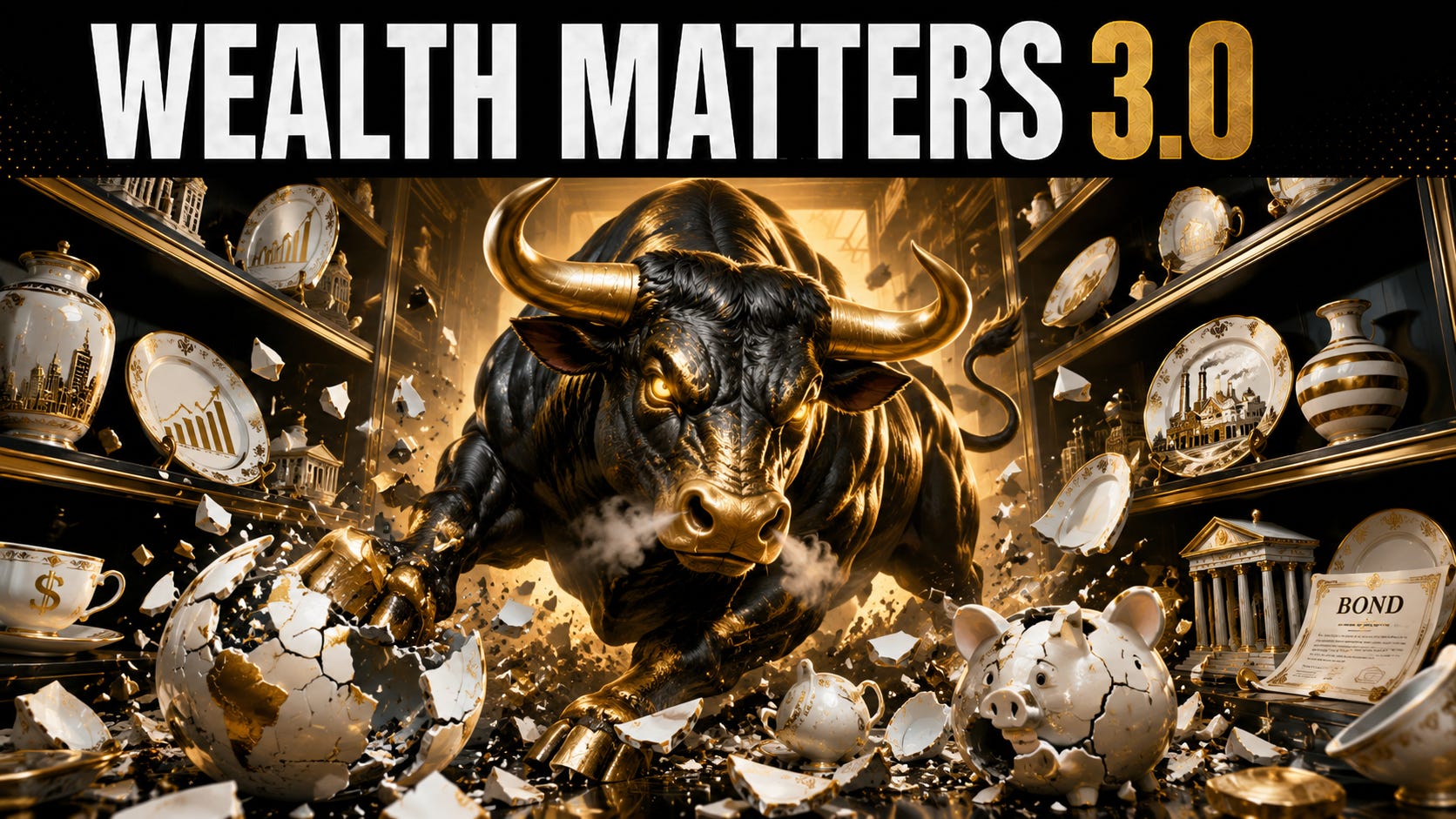
That is a very different kind of risk. It is not the risk of obvious recession. It is the risk of pretending resilience means invincibility.
Where Danny’s Lens Comes From
I always like to start these conversations with the human operating system before we get into the market operating system.
Where did the guest come from?
What shaped the lens?
What formed the reflexes?
With Danny, the answer started in Montreal, Canada.
He grew up as a competitive athlete, especially in tennis. He played internationally as a junior, was nationally ranked, and was on a path that might have taken him toward Division I college tennis before an injury at fourteen ended that track.
That matters because the discipline stayed.
Danny said something early in the conversation that revealed more than a resume ever could. In training, whatever you did today does not matter when you wake up tomorrow. You have to do the work again.
That sentence is almost annoyingly true. It is also the foundation of a good investment process.
Markets do not care how smart you were yesterday. They do not care how good your last call was. They do not care how much time you spent building the model, researching the trade, defending the thesis, or winning the previous set.
You wake up tomorrow, and the market asks the same question again:
What do you see now?
Danny carried that athlete’s discipline into his education and career. He built his professional life around the intersection of macro and derivatives. He started in risk management for exotic options, advising institutional clients including pensions, endowments, hedge funds, banks, and C-suite risk leaders on complicated option portfolios and firm-level risk. He then went to the University of Chicago for his MBA, completed the CFA, lived through the education of the global financial crisis, moved onto macro trading desks, covered hedge funds on interest-rate volatility strategies, built an interest-rate platform at a broker-dealer, and later worked in the hedge fund world as a proprietary trader with his own research process, views, and portfolio.
That is not a generic “finance guy with charts” background. That is a risk-first background.
And when you are trying to make sense of an economy where equities can rise while yields are still high, where boomers are spending more than expected, where millennials are moving into peak productivity and family formation, where retail leverage has changed form, and where the bond market may be losing patience with policy, a risk-first lens is useful.
The Intersection That Matters
Within the first few minutes, Danny said his work lives at the intersection of macro and derivatives.
That sentence gave me the episode.
After more than fifty ATOMIQ LEVEL conversations with extraordinary investors, founders, writers, advisors, and macro thinkers, I had not spent enough time in that exact intersection.
It matters because most everyday investors hear “derivatives” and immediately think 2008.
Weapons of mass destruction.
Counterparty risk.
Opaque balance sheets.
A system nobody understands until it is already on fire.
That reflex is understandable. We are all scarred by the global financial crisis to some degree. But Danny made an important distinction. When he says macro and derivatives, he is not primarily saying derivatives are the hidden systemic bomb likely to take down the economy tomorrow.
He is talking about how he researches the world, develops conviction, and then decides whether derivative markets give him an edge in expressing that conviction.
That distinction matters for every investor, whether you trade options or have never touched one.
Having an opinion is not the same as having an edge.
Having a concern is not the same as having a portfolio action.
Having a chart is not the same as having a trade.
Having conviction is not the same as being paid properly for the risk.
Danny spends most of his time researching. He is not sitting there firing off twenty trades a day for entertainment. He studies the macro economy across different time horizons. He starts with long-term structural forces like demographics, then moves into financial conditions for more immediate inflection points, then uses short-term models to identify rich or cheap expressions. Only after that does he look at the derivatives market and ask whether there is an edge in expressing the view.
That is a grown-up process. And a grown-up process is what most people need more than one more hot take.
Four favors before you continue
Hit the ❤️. The algorithm is a validation machine that needs your cheap dopamine to keep us at the top of your feed.
Hit the 🔄 restack. Somebody’s life will change passively today, and you can get the credit for bringing it to them from both of us.
Hit 📤 share. You know exactly one person in your email list or text stream who needs something on their playlist or reading wire today.
Drop a comment. Tell me your biggest insight, your greatest challenge, your counter-argument or gap in the conversation, or a recent related triumph. I read every one, and I reply to the ones that make me laugh, make me think, or make me money. Preferably all three.
The Least Viral Work May Be the Most Important
One of Danny’s strongest points was also one of the least fashionable.
Demographics.
He said when he posts about demographics, those are probably his least popular posts. Yet he also said demographics may be the most important work he has done.
That is usually how the useful stuff works.
The internet loves speed. It loves the chart that explains yesterday, the trade that explains tomorrow, the quote that makes people feel smarter in ten seconds, and the forecast that offers certainty to people who are anxious enough to pay for it.
Demographics move slowly. Slow is boring. Slow is also structural.
Danny’s point is that demographics do not tell you what GDP will do this year, what the market will do next week, or whether the Fed moves at the next meeting. What demographics tell you is the capacity and constraint of the economy.
How much labor is available?
Who is working?
Who is retiring?
Who is spending?
Who is saving?
Who is forming households?
Who is buying homes?
Who is entering peak productivity?
Who is leaving the labor force?
Those questions do not produce easy dopamine. They produce context. Danny said he knew as far back as 2018 that this decade would be more inflationary than the prior decade because of demographics. The pandemic and stimulus turbocharged parts of the cycle, but the underlying demographic setup already pointed toward a different regime than the one investors had grown comfortable with after the global financial crisis.
That is the part worth sitting with.
The post-GFC decade trained people to expect low inflation, low rates, cheap capital, global labor abundance, central-bank rescues, and asset-price support without immediate inflationary consequences.
That was not a law of nature. It was a regime. And regimes end.
Boomers Did Not Stop Spending
One of the most important demographic points Danny made was about baby boomers. Most models assume people retire and spending falls off.
Danny pushed back.
The basket changes. Spending does not necessarily disappear. Maybe retirees buy fewer cars tied to commuting. Maybe they spend less on certain work-related habits. Maybe the rhythms change. But healthcare, services, travel, family assistance, lifestyle, housing support for children, and other categories can keep money moving through the economy.
In aggregate, Danny argued, boomers have retired with so much wealth that they are spending more than demographic models might have suggested. Their spending is not merely flatlining. It has increased. They are living, spending, enjoying retirement, and often helping children buy homes or transferring wealth forward.
That matters for macro. It also matters for Wealth Matters 3.0.
I have spent a lot of time writing about the great wealth transfer, the administrative burden on Gen X, family succession, ownership literacy, and the gap between inheriting assets and inheriting a system.
Danny approached the same terrain from another altitude. He is looking at what this wealth does to the economy. I am often looking at what this wealth does to families.
Both are true.
The boomer wallet is not just a retirement-planning topic. It is a macro input. It influences consumption, inflation, housing, family formation, intergenerational support, and the persistence of an economy that keeps refusing to break on schedule.
That is why macro is never really separate from family life.
Your parents’ retirement behavior is macro.
Your child’s housing affordability problem is macro.
Your portfolio’s sensitivity to asset prices is macro.
Your family’s liquidity plan is macro.
Your business’s labor shortage is macro.
Your advisor’s challenge explaining this environment is macro.
Wealth is personal (micro) until enough people behave the same way. Then it becomes structural. Then it becomes macro.
A Word From August’s Ecosystem Brand Partner
Before we get into this topic further, I want to thank one of our Wealth Matters 3.0 ecosystem brand partners and Wealth CMDR PRO Subscribers: PEBL.
PEBL is a company I personally use across my own portfolio companies and personal strategy because hiring abroad or remote should not require founders, operators, family offices, or distributed teams to spend months building employment infrastructure before they can bring great people into the business.
Learn more about PEBL
Hiring abroad or remote can take months when you do it on your own, but with PEBL you can hire in over 185 countries in minutes and have your new hire onboarded by Monday.
PEBL is normally $399 a month per employee — already a no-brainer for what you get — but right now there’s a limited-time offer on their site that makes it even easier to get started.
Go to hipebl.ai.

Terms and conditions apply.
Millennials Are Becoming the Engine
Danny also pointed to millennials as a structural force many people still misunderstand.
For years, millennials were discussed as if they were permanently young, permanently renting, permanently delaying adulthood, and permanently disrupting old industries through lifestyle choices.
That story is dated.
Millennials are now moving into peak productivity, household formation, management roles, homebuying years, and the life stage where careers, children, responsibility, and consumption patterns compound.
That matters. It supports housing demand. It supports productivity. It supports spending. It changes the labor force. It interacts with boomer retirement, lower aggregate savings, and persistent labor shortages.
In other words, the economy is not simply being propped up by vibes, memes, stimulus hangover, or magical thinking. There are structural forces underneath the cycle that help explain why growth has stayed stronger than many expected.
That does not mean there is no risk.
It means the “why won’t this thing just collapse already?” crowd may be underweighting the reasons it has not. Before you can identify where fragility lives, you have to understand what is keeping the system upright.
Danny helped illuminate that with this discussion.
The Wealth Effect Is Doing the Heavy Lifting
The biggest phrase of the episode, at least for me, was Danny’s framing of the wealth effect.
After the global financial crisis, the economy changed. Households were deleveraging. Housing had busted. Portfolios had taken large hits. Credit had tightened. Traditional monetary stimulus did not work the same way because people were trying to repair balance sheets rather than borrow more.
So the Federal Reserve stimulated through asset prices.
Get asset prices up.
People feel wealthier.
If they feel wealthier, they spend.
That is the wealth effect. And according to Danny, it has become one of the biggest drivers of this economy.
That is both explanatory and unsettling.
It helps explain why the economy can remain stronger than expected while so many people feel like something is off. Asset owners see portfolios and home values rise. They spend. Businesses respond. Confidence persists. Tax receipts, retirement psychology, and risk appetite all feel better when asset prices rise.
But it also creates dependency. When the stock market becomes more than a scoreboard, it becomes part of the engine. That means a large enough equity correction can become more than a symptom of a recession.
It can help cause one.
That is the fragile side of the wealth effect. It works beautifully on the way up. It creates spending, confidence, and a sense that the machine is self-reinforcing.
But paper wealth is still paper until it is converted, protected, diversified, or used intentionally. I pushed Danny on that because from an older guy’s lens, the wealth effect is there until it is not. The wealth may feel real, and in many ways it is real, but if it has not been harvested, hedged, protected, or turned into something durable, it can disappear faster than the lifestyle it helped fund.
That is not a call to panic. It is a call to stop confusing mark-to-market confidence with permanent security.
Derivatives Are Not the Fire This Time
I asked Danny directly whether he sees risk in the derivatives space. His answer was calming but not complacent.
He does not currently see a derivative-driven crisis as the likely thing that takes down the economy. That is important because the internet loves to recycle the last crisis as the template for the next one.
But the next crisis usually does not arrive wearing the same costume.
Danny’s concern is not a repeat of 2008 derivatives architecture. His concern is leverage in equity markets and risk assets, especially through newer channels of retail participation.
Old leverage was margin in a securities account. New leverage shows up through short-dated options, zero-day options, and levered ETFs.
These instruments may not create the same systemic balance-sheet risk people associate with 2008. A zero-day option can simply expire worthless at the end of the day. The buyer loses the premium. That is painful, but not necessarily systemically explosive.
But these instruments can amplify intraday volatility. They can make moves sharper on the way up. They can make moves sharper on the way down.
They can create fragility in pockets of the market even when the headline index does not look like it is doing much.
That is a critical distinction. The market does not need to crash for you to get crushed. Systemic risk and personal ruin are not the same thing.
An overlevered investor can be right on the idea and wrong on the survival math. Danny referenced a high-profile hedge fund liquidation dynamic where the ideas may have been right, but the leverage was too large. When positions moved against the portfolio, margin calls forced liquidation even though the managers still loved the assets.
That is one of the oldest lessons in markets. Leverage can turn timing into destiny.
The Economy Can Be Strong and Too Loose
The title of this piece comes from the central tension of the conversation.
The economy may be too strong for its own good.
Danny has been bullish on a fundamental basis since 2023 because the economy has been strong and financial conditions have been easy. In his view, the Federal Reserve gave up on inflation before the finish line, and that created an environment conducive to equities.
But strength can become a problem if policy remains too loose.
One of Danny’s key observations was that equities rallied even with the 10-year yield around levels that, in prior years, would have pressured risk assets. If the NASDAQ can jump materially while the 10-year is still elevated, that says something about financial conditions.
His interpretation was blunt: conditions are too loose. That does not mean the economy is fake. It means the transmission mechanism is overheating.
Asset prices are rising so fast that if they do not turn, the economy may not turn either. And if the economy does not slow, interest rates may need to go materially higher to cool it. If policymakers wait too long, they may eventually be forced to tighten more aggressively than would have been necessary if they had moved gently earlier.
That is the danger of delayed discipline. Go gentle now, or risk breaking more later. That was one of the most practical takeaways from the episode.
Not because the average Wealth Matters reader is trying to forecast every Fed meeting. Most are not. But because every owner, advisor, investor, and family steward understands this principle in other parts of life.
Small maintenance ignored becomes a major repair. A difficult conversation delayed becomes a crisis. A debt problem avoided becomes a restructuring.
A succession issue deferred becomes family litigation.
A portfolio imbalance left alone becomes forced selling.
A policy mistake tolerated too long becomes a regime change.
Markets are not exempt from that pattern.
The Dollar Is the Last Trick
Another important part of Danny’s playbook involved the dollar.
He described a regime change after a Federal Reserve meeting, where Fed credibility on inflation had weakened and the dollar sold off. In his framework, a weaker dollar can act like liquidity for equities. It can be a gift to risk assets, especially if yields stop rising or oil softens.
That helps explain why equities can rally even when other inputs look less friendly.
But the same setup has a limit.
If the bond market keeps selling off, if long-end yields move meaningfully higher, and if the front end of the curve catches up, the dollar may no longer weaken. If the dollar begins strengthening hard, Danny sees a path toward a real equity correction.
Again, the point is not to take that as prophecy. The point is to understand conditional risk.
What changes the setup?
What tells you the regime has shifted?
What invalidates the bullish case?
What forces policymakers to respond?
What turns liquidity from friend to enemy?
This is why I like Danny’s Sunday playbook concept. A playbook is not a crystal ball. A playbook tells you what you are watching, what matters, and when you have to turn. That is healthier than pretending certainty exists.
The Bond Market Still Dictates
At one point in the conversation, I said something that may be the simplest line for everyday investors to remember:
In the short run, the equity market matters, but the bond market dictates.
That reminds me a lot of the husband who said he is the “head” of the family, and the wife who knows she is the “neck”.
Equities get the attention because equities are more theatrical. They produce the wealth effect. They create the dopamine. They are what people check on their phones. They make headlines. They make people feel rich, smart, poor, or stupid depending on the week.
But the bond market is the cost of capital.
The bond market touches mortgages, business loans, real estate cap rates, private credit, bank balance sheets, corporate debt, government financing, discount rates, venture valuations, and the relative attractiveness of every risk asset.
A generation raised inside falling rates and repeated central-bank rescues can forget that.
But capital still has a cost.
And if the bond market decides policymakers are not where they need to be, the dog can come back and remind the tail who is in charge.
Danny’s view was that if the bond market sends a loud enough message, policymakers may have to respond whether they want to or not. That is the part investors need to respect.
The Fed can talk.
The equity market can cheer.
The dollar can weaken.
Oil can move.
But the cost of capital still matters.
Whack!!
Why This Matters Beyond Traders
Some people will hear this kind of conversation and think it is only relevant to traders.
I disagree.
The full-time trader may care about how to express a view through options, rates, currencies, or relative-value trades. But the Wealth Matters reader has a different use case.
The founder needs to know whether the cost of capital is likely to stay higher, whether customers are still spending because of asset-price confidence, and whether hiring or financing assumptions remain sane.
The advisor needs to know how to talk clients through a market that is strong, fragile, and path-dependent without sounding like a panic merchant or a cheerleader.
The family office needs to understand whether the liquidity plan can survive a correction, a rate shock, or a period where private assets lag the adjustment already happening in public markets.
The Gen X inheritor needs to understand that demographic wealth transfer is not just about assets arriving someday. It is already affecting housing, consumption, parental support, family obligations, tax planning, and administrative complexity.
The retiree needs to understand that spending baskets change, but spending does not necessarily vanish, especially when paper wealth makes lifestyle feel secure.
The next generation needs to understand that leverage, options, and ETFs can make markets feel more accessible while also making mistakes more expensive.
And everyone needs to understand that net worth and net happiness are connected, but not identical.
Your net worth may be rising because the wealth effect is doing its job.
Your net happiness may still be falling because the same economy that lifted your assets made labor, housing, insurance, healthcare, taxes, and replacement costs feel impossible.
That is why macro matters. Not because everyone needs to become a macro trader. Because everyone lives downstream from macro whether they trade it or not.
The Playbook Beats the Prediction
One of the most honest moments in the conversation came when I asked Danny where he thinks we are going over the next 18 months.
He did not pretend to know. He said he cannot think that far ahead because there is too much path dependency.
That is exactly the right answer.
Most people do not want the right answer. They want certainty. They want a number. They want a target. They want someone to tell them the year, quarter, month, and trigger so they can outsource the discomfort of decision-making.
Markets do not work that way. A better process asks better questions.
What is the current regime?
What are the structural forces?
What are the near-term inflection points?
What is the bond market saying?
What is the dollar saying?
What are equities discounting?
What are financial conditions doing?
Where is leverage building?
What would change the view?
Where is the market paying you to take risk?
Where are you taking risk without getting paid?
That is a playbook.
A prediction demands belief. A playbook demands attention. And in a market this strange, attention is more valuable than bravado.
Why You Should Press Play
Press play if you want to understand why this economy may be stronger than the doomers expected and more fragile than the bulls want to admit.
Press play if you want to hear how Danny Dayan built a risk-first lens from competitive tennis, exotic-options risk management, the global financial crisis, macro trading desks, interest-rate volatility, and proprietary trading.
Press play if you want to understand why demographics may be one of the most ignored but important forces shaping this cycle.
Press play if you want a better explanation of why boomers are still spending, why millennials matter, and why the economy keeps refusing to break on schedule.
Press play if you want to understand the wealth effect and why asset prices have become more than a market scoreboard.
Press play if you want to hear why Danny does not currently see a derivative-driven systemic crisis but does see leverage, short-dated options, zero-day options, levered ETFs, and retail participation creating sharper market fragility.
Press play if you want to understand why the bond market still dictates even when the equity market gets all the attention.
Press play if you want a practical framework for thinking in playbooks instead of predictions.
Press play if you are an advisor trying to make clients sharper without drowning them in jargon.
Press play if you are a business owner whose life is built in the real economy but whose retirement, liquidity, and future are still tied to the financial economy.
And press play if you are trying to grow and protect both your net worth and your net happiness in an economy that may be too strong for its own good.
Danny Dayan gave us a more useful economic health check than the usual binary nonsense.
The economy is not simply fine. The economy is not simply broken.
The economy is strong in ways people underestimated, stimulated in ways people may not fully appreciate, and fragile in places that do not always show up in the headline index.
Demographics are pushing differently than the last cycle. Boomers are spending more than expected. Millennials are becoming a bigger engine. The wealth effect is doing heavy lifting. Retail leverage has changed form. Derivatives may not be the systemic bomb, but leverage can still hurt real people.
The Fed’s credibility matters. The dollar matters. The bond market matters most when it decides to remind everyone that the cost of capital is not optional.
That is the lesson. Not panic. Not complacency. Preparedness.
Subscribe to Danny Dayan on Substack. Read his Sunday playbook. Join his community if his work fits your process. Listen to the full ATOMIQ LEVEL conversation if you want to hear how a risk-first macro thinker connects demographics, derivatives, financial conditions, the wealth effect, the dollar, bonds, equities, and policy into one practical operating system.
Because the next market break may not come from obvious weakness. It may come from strength that stayed too loose for too long.
The real risk is doing nothing.
~Chris J Snook
Thank you Alexandra Damsker, Monique Wright, and many others for tuning into my live video with Danny Dayan! Join me for my next live video in the app.